-
Agrivoltaics
the practice of utilizing farmland both for agriculture and for solar power generation. This can include practices such as grazing animals around solar panels and/or growing crops around or even under panels (panel height is adjusted depending on the specific crop or livestock).
-
Battery energy storage system (BESS)
a grouping of batteries, typically lithium-ion, that allows for a utility to collect excess energy that they produce and use it later as needed. Typically used with intermittent power like wind and solar, but can be used with any power source.
-
Capacity factor
the ratio measuring how much energy a generating source actually produced during a period of time compared to how much it could have produced if running at full capacity over the same period.
-
Carbon Sink
a term used to define anything that absorbs more carbon than it releases. For example, forests, large bodies of water, soil, and more.
-
Carbon capture and storage (CCS)
a system designed to capture outgoing carbon dioxide (CO2) at locations such as a coal/natural gas plant or a cement or steel factory. Once the CO2 is captured, it is then transferred and stored, typically underground.
-
Carbon dioxide equivalent (CO2e)
a measure of the effect of different greenhouse gases on the climate that uses carbon dioxide (CO2) for a baseline. For example, methane (CH4) is 28 times more powerful of a greenhouse gas than CO2, so one methane molecule is equal to 28 CO2e.
-
Clean Energy
energy generation that creates no air pollution. The primary difference to renewable energy is that clean energy also includes nuclear generation.
-
Decarbonization
the reduction or ending of carbon-emitting activities.
-
Decommissioning
the process of dismantling and removing a generating facility from a location.
-
Demand
the rate at which electricity is being used at any given moment.
-
Demand-side Management (DSM)
the process of lowering energy consumption by improving a customer’s energy efficiency. This can involve weatherization (improving a building’s insulation/resistance to extreme temperatures), efficiency upgrades for appliances, smart thermostats, or even programs that encourage energy-saving behaviors.
-
Depth of Discharge
the percentage of the battery that has been discharged relative to the total storage capacity of the battery. For example, using a battery from 100% to 20% is a greater depth of discharge than going from 100% to 50%. Repeated deep discharges is one factor that can affect the lifespan of a battery.
-
Direct Air Capture (DAC)
a type of carbon capture method, direct air capture draws CO2 from ambient air at any location rather than directly at the source. It is currently the most expensive method of carbon capture available.
-
Distributed Generation
a method of generating power that, rather than focusing all the generators in a single location, spreads them out over a large area. Typically, this term is used in reference to residential solar panels that provide power to a household directly and may provide excess power for use on the grid.
-
Dual-axis Tracker
an addition to a solar array that allows the array to follow the Sun’s path through the sky day to day while also adjusting to the Sun’s position as it changes through the seasons. This technology is almost exclusively used by utility-scale solar developers in an effort to reach the solar panels' maximum efficiency year-round.
-
Ecovoltaics
the practice of planting native plants and other beneficial species in and around solar panels. This practice often provides abundant sources of food for pollinators as well as useful habitats for local animals, all while improving soil quality and water infiltration.
-
Electric Vehicles (EVs)
A motor vehicle powered by an electric battery rather than an internal combustion engine (ICE). EVs are typically quieter, heavier, and have lower maintenance costs than traditional ICE vehicles.
-
Energy
the measurement of power (watts, kilowatts, megawatts, etc.) over a period of time (seconds, minutes, hours). Common examples include kilowatt-hours, megawatt-hours and more.
-
Enhanced Oil Recovery (EOR)
a process developed by oil companies in which gases like CO2 are injected underground increasing pressure and allowing the company to collect more oil than they would have otherwise.
-
Fossil Fuels
carbon-based fuels such as coal, natural gas, and oil that release carbon dioxide (CO2) when burned. These fuels, particularly coal, can also release pollutants such as lead, mercury, and sulfur dioxide (SO2), all of which are known to cause negative health effects in humans.
-
Generator
a device that converts energy from a source into electricity. This can include solar & wind farms, hydropower, fossil fuel plants, and/or nuclear power plants. This term is also sometimes used in reference to an individual, organization, or company that produces electricity.
-
Geothermal Heating and Cooling (GHC)
a heating and cooling system that utilizes a series of underground tubes to transfer heat from or into the ground, warming or cooling a building. This process works similarly to how a refrigerator heat exchange functions and it is currently the most efficient means of heating or cooling a home available.
-
Gigawatt-hour (GWh)
a unit indicating energy used. A data center that uses 200 MW of power running for 5 hours will have used 1000 MWh or 1 GWh of power.
-
Intermittent Energy
sources of energy that aren’t always available. Typically used in reference to wind and solar energy, as their availability can vary based on the weather or time of day.
-
Kilowatt-hour (KWh)
a unit indicating energy used. A 100 watt lightbulb that runs for 10 hours will have used 1 kWh of energy. Likewise, a 1000 watt (1 kW) washer that runs for 1 hour will also have used 1 kWh of energy.
-
Levelized Avoided Cost of Energy (LACE)
a method of measurement comparing different energy sources by looking at what it would cost to generate a certain amount of energy using existing generation versus a new generation project. LACE is typically compared to the Levelized Cost of Energy (LCOE). If LACE exceeds LCOE, then typically the project is viewed as more economically attractive.
-
Levelized Cost of Energy (LCOE)
a method of comparing different energy sources by taking into account the varying costs of permitting, staffing, fuel, maintenance, and other costs that different energy sources incur. Typically, values will be provided in $/MWh. A lower LCOE means that a specific type of generation is more affordable over its lifetime as compared to other generation methods.
-
Levelized Cost of Storage (LCOS)
a method of comparing different means of storing energy by taking into account variables such as the cost of permitting, cycle efficiency, cost of maintenance, and more. Values are typically measured in $/MWh. The lower the LCOS value, the more affordable that specific storage will be over its lifetime.
-
Megawatt-hour (MWh)
a unit indicating energy used. A home using 10 kW of power for 100 hours will have used 1 MWh of energy.
-
Nameplate Capacity
the theoretical maximum output of a generating source. For intermittent sources like wind or solar, it is the expected generation under ideal conditions.
-
Net-zero
a term typically associated with emission reduction goals. It indicates a situation in which the amount of emissions being released is equal to the emissions being taken out of the atmosphere by carbon sinks like trees, water, and more.
-
Photovoltaics (PVs)
scientific name for solar panels. Photo means light and voltaics means voltage, so literally creating electricity from light. Photovoltaics generate electricity by capturing the energy from the Sun.
-
Power
the measure of energy transferred or converted at a specific moment in time. The common unit used for power is a watt.
-
Power Purchase Agreement (PPA)
a contract between a generator and a customer where the generator agrees to sell a predetermined amount of energy for a predetermined amount of time. This contract can also determine the price of the energy, the energy source, where it is delivered, and what specific times the energy is sold. PPAs are useful in Nebraska as they allow a public utility to increase their energy supply while simultaneously allowing both private developers and the areas they are located to benefit financially from the generation of energy.
-
Public Power
a term used to indicate that a utility is publicly owned, locally controlled, and not-for-profit. As of 2025, Nebraska is the only state with 100% public power. This means we only pay the cost of producing electricity and maintaining the grid, keeping our rates lower than most other states.
-
Renewable Energy
energy that is created from sources such as wind and solar that cannot run out. Often is used interchangeably with clean energy; however, renewable energy does not include nuclear power while clean energy does.
-
Residential
a term referring to individual homeowners and/or renters.
-
Short Ton
2000 pounds, typically used in the United States, and can also be simply referred to as a “ton”.
-
Single-axis Tracker
an addition to a solar array that allows panels to rotate 180°, facing East at dawn and West at sunset, following the Sun’s position over the course of the day. These additions are typically used by utility-scale solar developers to improve the efficiency of a solar array.
-
Six Decibel Rule
a general rule stating that, for each time you double your distance (in meters) from a source of noise, the volume drops roughly six decibels.
-
Small Modular Reactor (SMR)
an upcoming technology that seeks to design nuclear reactors with a maximum generation capacity of 300 MW that consist of parts that are built in factories rather than being custom made and can be swapped out if necessary.
-
Solar Array
the complete setup required to generate power using solar energy. Typically includes photovoltaic panels, inverters, wiring, supports, and transmission lines.
-
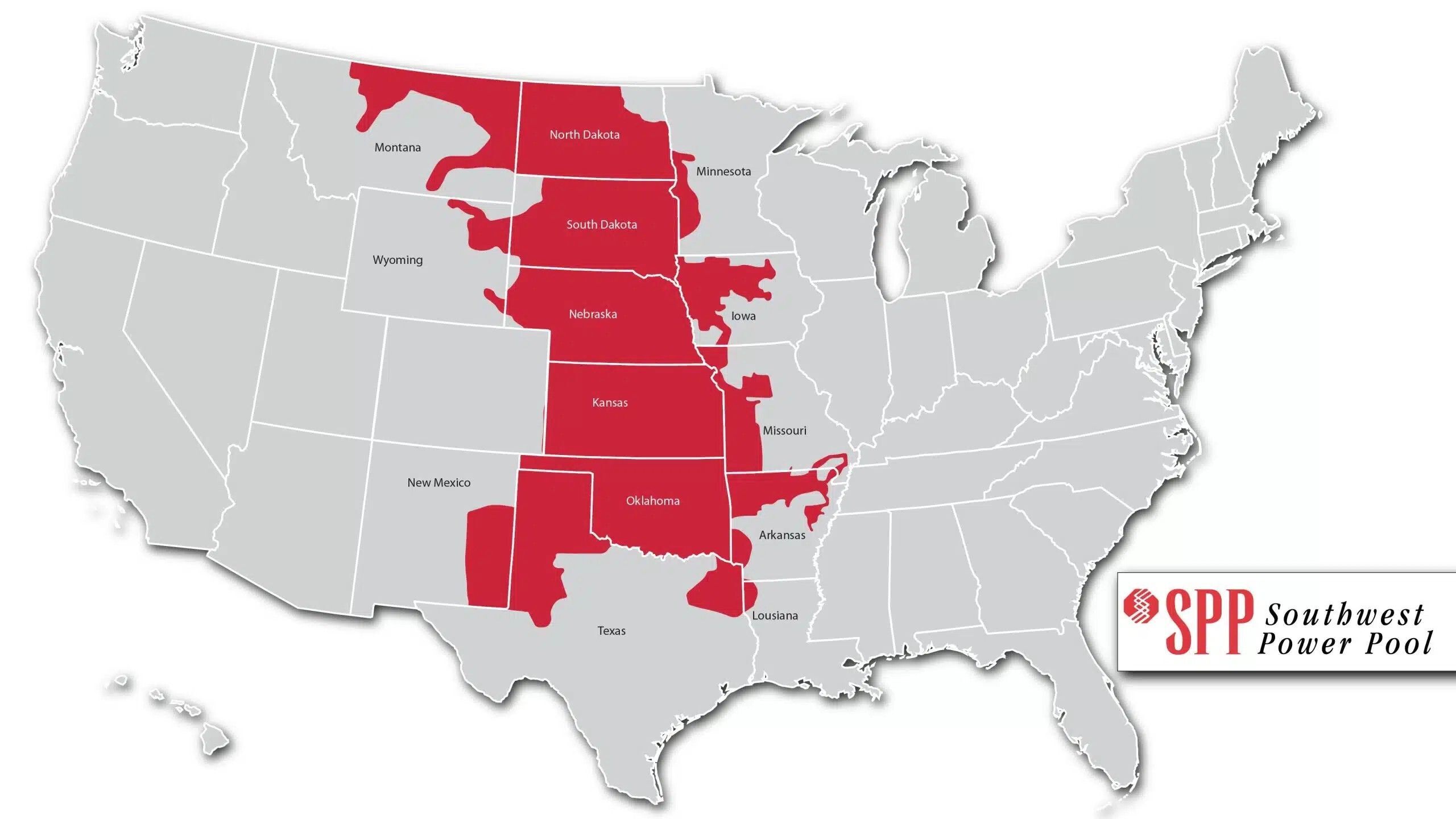 Southwest Power Pool (SPP)
a regional transmission organization (RTO) running from northern North Dakota & Montana down to northern Texas. It is responsible for ensuring that all utilities in the region have reliable sources of power, adequate transmission infrastructure, and that wholesale electricity prices are competitively low.
-
Thermal Runaway
a rare malfunction that can occur in battery storage systems when heat created by a battery is not released properly, leading to the battery rising in temperature and raising the temperature of the batteries around it, causing a chain reaction and potentially leading to a fire.
-
Tonne
Also known as a metric ton. Equal to 1000 kg or 2204.62 pounds. Typically used in areas that use the metric system.
-
Transmission
the infrastructure (transformers, inverters, power lines, etc.) for and process of moving energy from a generating source to where it is being used.
-
Utility-scale
a term referring to relatively large generating sources intended to provide power to a utility grid, rather than an individual household or building.
-
Wake Effect
the name for the increased turbulence and slower wind speeds in the area behind a wind turbine. This effect can reduce the efficiency of other wind turbines if they are placed too close together.
-
Watt (W)
a unit of power that measures the work being done at a given time. A single watt is equal to 1 joule/second and can be calculated by multiplying volts and amps. In greater amounts, you may see this unit with an additional prefix such as:
Kilowatt (kW) - 1,000 watts, typically used in reference to residential generation capacity and/or monthly energy use of individual homes.
Megawatt (MW) - 1,000,000 watts, typically used in reference to utility-scale generation capacity and/or municipal energy use
Gigawatt (GW) - 1,000,000,000 watts, typically used in reference to national generation capacity/energy use -
Weatherization
the process of improving energy efficiency and resistance to changes in weather and temperature. Examples of weatherization include installing multi-pane windows, improving insulation, sealing gaps where air can enter or escape, installing more efficient heating and cooling systems, and more.
-
Wind Power Equation
An equation to determine how much power will be produced by a wind turbine. The equation is as follows:
Power = (Cp)*(0.5)*(ρ)*(A)*(V³)
Cp = Maximum power coefficient, typically ranging from 0.25 to 0.45 (theoretical maximum = 0.59). This is the percentage of power that is converted from rotation into electricity.
ρ = Air density, kg/m³
A = Rotor swept area, m². The rotor spins in a circle, so area is the same: πr² (r is the radius of the rotor, otherwise known as the length of the blade in m, π = 3.1416)
V = Wind velocity, m/sWe include this equation because it helps illustrate two important pieces about wind. First, velocity is cubed, meaning that a turbine will produce 8 times as much power every time the wind speed doubles. This explains why turbines are built in Nebraska where wind speeds are some of the highest on average in the country. It also explains why turbines are very tall, since the wind higher up is stronger and more consistent because it is not affected by buildings or other features on the surface that disrupt wind flow.
Secondly, the area of a circle is πr². This means doubling the radius creates 4 times the power. This explains why wind turbine blades today are so long, since you can get significant increases in power generation by increasing their length even a small amount. At this point, the main constraint to putting even bigger blades on turbines is the complexity of transporting something so long along roads, bridges, or tunnels to get it on site.
-
Wind Turbine
a standing structure that captures the energy produced by blowing wind and turns it into usable energy by rotating blades. Wind turbines can be found both on land and offshore and come in a variety of shapes and sizes.
