- Isn't geothermal energy restricted to places with volcanic activity?
- How does geothermal heating and cooling work?
- Is geothermal heating and cooling worth the cost?
Isn't geothermal energy restricted to places with volcanic activity?
Geothermal energy, while most accessible along the boundaries of tectonic plates, can be found to some degree all over the world. Despite Nebraska not having any easily accessible geothermal sources strong enough to provide utility-scale power production, smaller scale geothermal heating and cooling systems are already in use in some areas.
One important distinction is that geothermal energy and geothermal heating and cooling (GHC) are not the same thing. Geothermal energy systems are when an entity utilizes energy stored in the earth to heat water, which spins a turbine, generating electricity. These are typically located in areas with high geothermal activity (Iceland, Indonesia, Western U.S., etc.) and used at a utility-scale. Geothermal heating and cooling systems (also known as ground-source heat pumps), while using a similar process, do not generate electricity. Instead, they utilize relatively stable ground temperatures to warm or cool water in a circulation system, which is then used to efficiently heat or cool a building. This kind of system can be used nearly anywhere and is typically used for individual buildings.
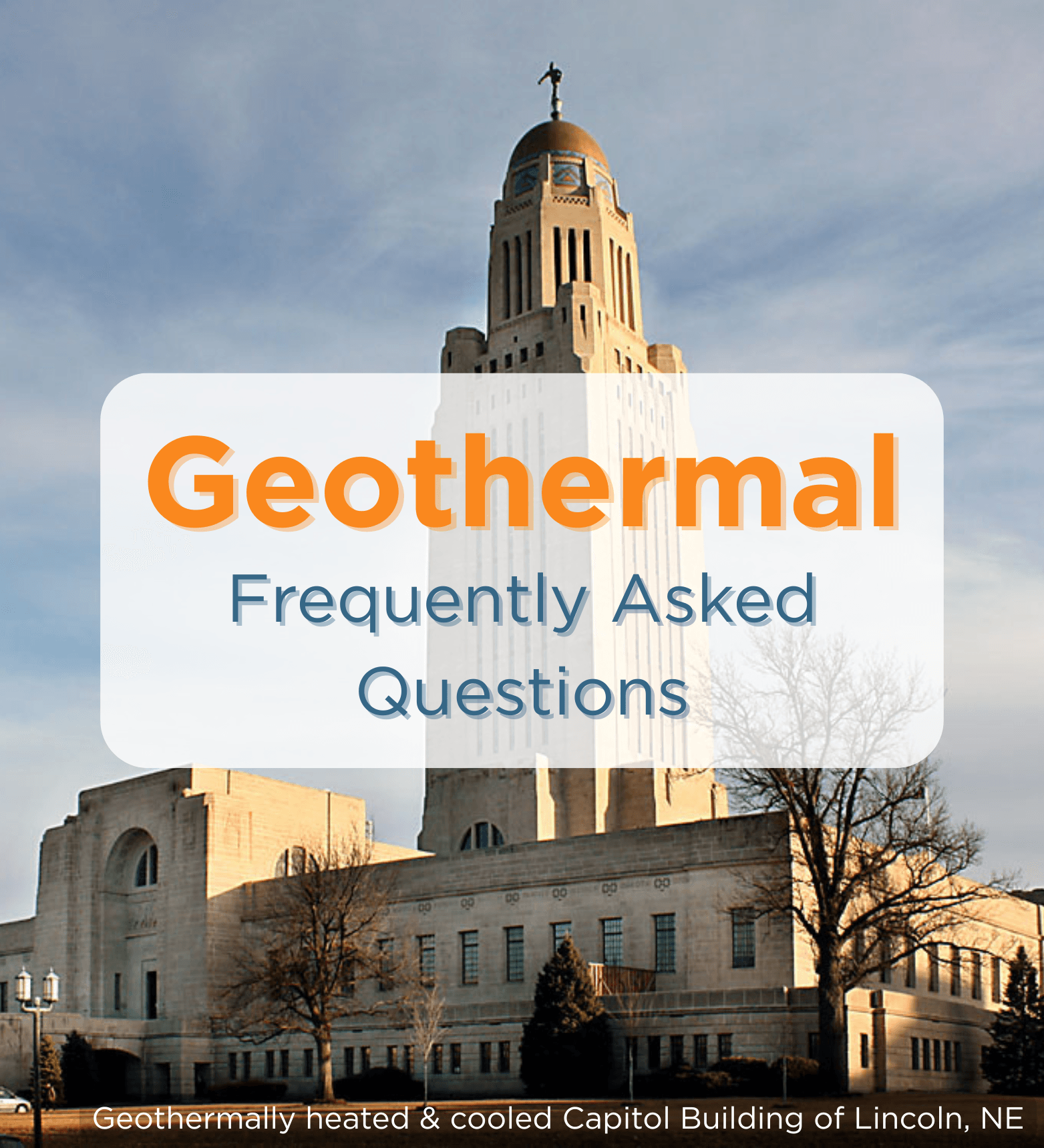
For example, 90% of Lincoln Public Schools’ square footage is heated and cooled using GHC systems. Heating and cooling systems like these use relatively stable ground temperatures to warm and cool buildings throughout the year. These kinds of systems are also used in the Lincoln capitol building, Peru State College, as well as in individual homes around the state.
Additionally, drilling techniques adopted from the oil and gas industry have led to a reimagining of geothermal energy suitable for more places. This “enhanced geothermal system” utilizes the heat emanating from Earth's core in more places, although it remains to be seen how widespread its adoption will be.
How does geothermal heating and cooling work?
Typically, a home that uses geothermal heating and cooling will have either vertical wells several hundred feet deep or horizontal trenches that are 5-6 feet deep and about 400 feet long. Within these wells or trenches, there will be piping to circulate water or antifreeze underground where heat can be taken from the soil in Winter or put into the soil in Summer. This works because soil is a consistent 40-50 °F year round.
As heat is moved from the house or ground, it is brought into a heat exchanger (much like the ones used in refrigerators) that will allow the air to cool or warm depending on the time of year, thereby heating or cooling the interior of the house. Below is a video that provides visuals on how that geothermal system might look and work.
Is geothermal heating and cooling worth the cost?
While geothermal heating and cooling (GHC) can be fairly costly up front (between $10,000-30,000 as of 2024), there are several reasons why it is worth investing in if one can afford to. First and foremost, many utility companies offer incentives for systems like GHC to help reduce the cost on the customer. Another reason is that GHC systems can reduce energy consumption by 25-50% when compared to air-source heat pumps, reducing the demands on the grid on the hottest or coldest days of the year when it is under the most stress. This is because soil temperatures are far less variable than air temperatures. GHC systems are also typically quieter, last longer, and require less maintenance than air-source heat pumps.
